Uncategorized

Why Fake Skincare Products Are Causing Skin Diseases in Bangladesh and How to Protect Yourself

Why Fake Skincare Products Are Causing Skin Diseases in Bangladesh and How to Protect Yourself

The numbers are alarming. Bangladesh's cosmetics market is valued at over $1.2 billion and growing at 15% annually. But behind that growth lies a parallel economy of counterfeit products that is putting millions of consumers at real medical risk.

This is not speculation. It is documented science.

The Evidence: What Researchers Have Found

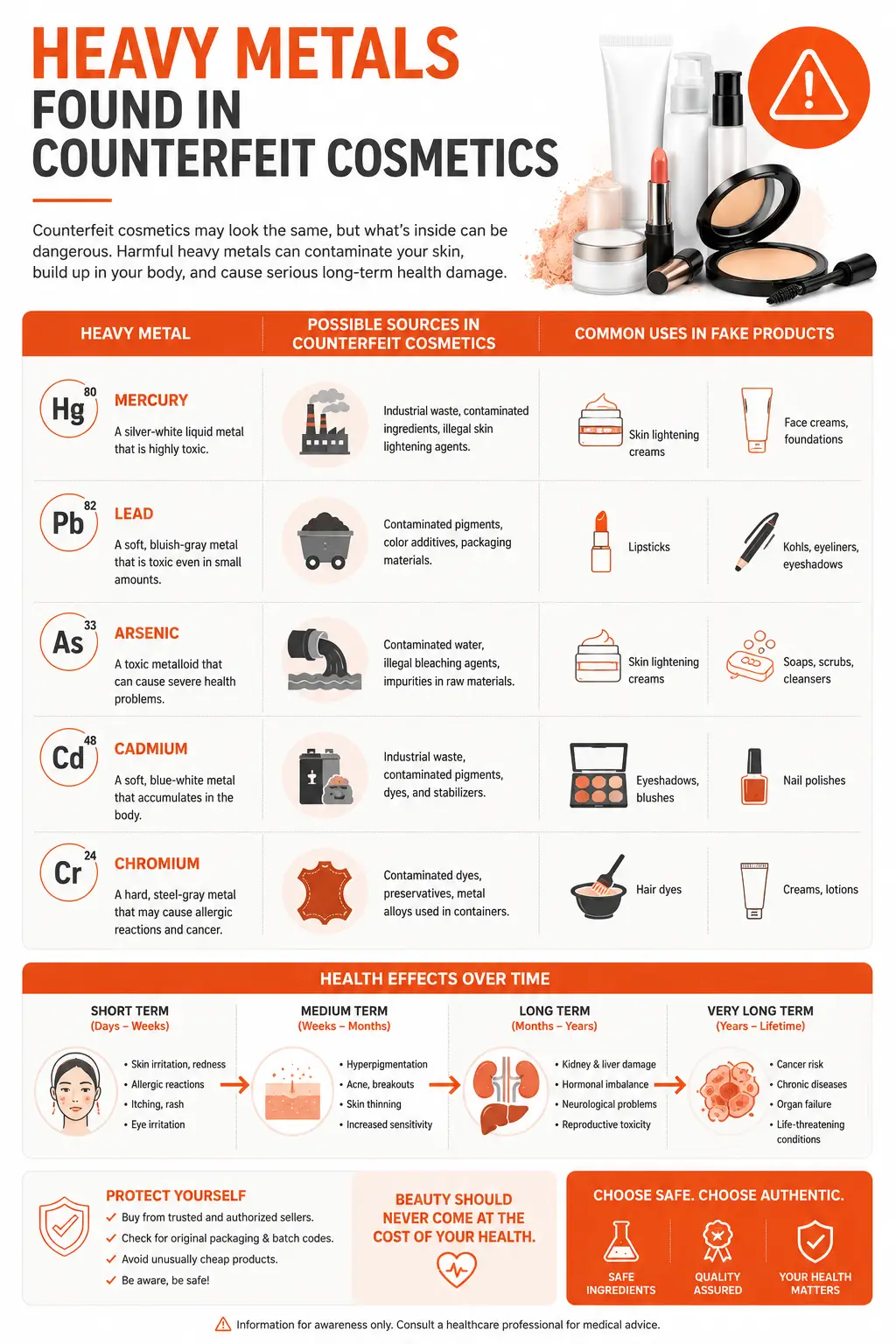
A series of studies conducted by Bangladeshi researchers and reported extensively by New Age Bangladesh found that cosmetic products sold in Dhaka's markets contain heavy metals at levels far exceeding international safety limits. Specifically, fairness creams and skincare products were found to contain excessive levels of mercury, lead, chromium, and cadmium.

Professor Md Shahidullah Sikder, Pro-Vice Chancellor and Chairman of the Department of Dermatology and Venereology at Bangabandhu Sheikh Mujib Medical University (BSMMU), has publicly stated that regular use of such substandard products can cause a range of skin diseases, including contact dermatitis, chemical burns, hyperpigmentation disorders, and in severe cases, skin cancer.

A 2021 study published in the Journal of Health and Pollution found that mercury concentrations in some skin-lightening creams sold in South Asian markets exceeded the WHO-recommended limit of 1 ppm by a factor of 1,000 or more.

What These Chemicals Actually Do to Your Body

Mercury

Mercury is a neurotoxin that can be absorbed through the skin. The World Health Organization classifies it as one of the top ten chemicals of major public health concern. In cosmetics, mercury inhibits melanin production, which is why it appears in fairness creams. But chronic exposure causes kidney damage, neurological symptoms, and skin inflammation that is far worse than the original concern.

Lead

Lead has no safe exposure threshold, according to the WHO. Even low-level exposure through daily skincare application accumulates over time, affecting the nervous system, kidneys, and reproductive health. Children and pregnant women are especially vulnerable.

Cadmium

Cadmium is classified as a Group 1 carcinogen by the International Agency for Research on Cancer (IARC). It accumulates in the body over decades and is linked to kidney disease and bone weakening.

Why Fake Skincare Products Are Causing Skin Diseases in Bangladesh and How to Protect Yourself

The Regulatory Gap

Bangladesh's drug administration and BSTI conduct periodic drives, but enforcement is inconsistent. The May 2026 Dhaka Tribune report noted that counterfeiters exploit festive seasons and the rapid growth of e-commerce to push fake products through channels that are difficult to monitor. The Bangladesh Cosmetics and Toiletries Manufacturers Association has called for stronger enforcement, but progress remains slow.

Meanwhile, the consumer bears the risk.

How to Protect Yourself: A Practical Checklist

First, avoid any product that promises dramatic skin-lightening results. These are the most likely to contain mercury. Second, buy from sellers who can prove product sourcing from authorised distributors or brand stores. Third, check batch codes and manufacturing dates. Fourth, if a product causes any unusual sensation like tingling, burning, or unusual whitening after first use, stop immediately and consult a dermatologist. Fifth, choose brands with established safety records and published clinical testing.

Choose Verified, Safe Products

Every product at Global Piks is purchased from official brand stores with documented provenance. We do not stock any product we would not use on our own family. Explore our full product range for certified authentic skincare.

References

  1. New Age Bangladesh. (2019). Fake cosmetics flood market, pose serious health hazards.
  2. World Health Organization. (2017). Mercury and health. WHO Fact Sheet.
  3. World Health Organization. (2022). Lead poisoning. WHO Fact Sheet.
  4. IARC. Cadmium and cadmium compounds. Monographs on the Evaluation of Carcinogenic Risks. Vol. 100C.
  5. Dlova, N.C., et al. (2021). Mercury concentration in skin-lightening creams. Journal of Health and Pollution, 11(29).
  6. Dhaka Tribune. (2026, May). Crisis deepens as fake goods flood Bangladesh markets.
  7. Chemistry Job Insight. (2026). Cosmetics Industry Growth in Bangladesh.

Leave a Reply

Your email address will not be published. Required fields are marked *