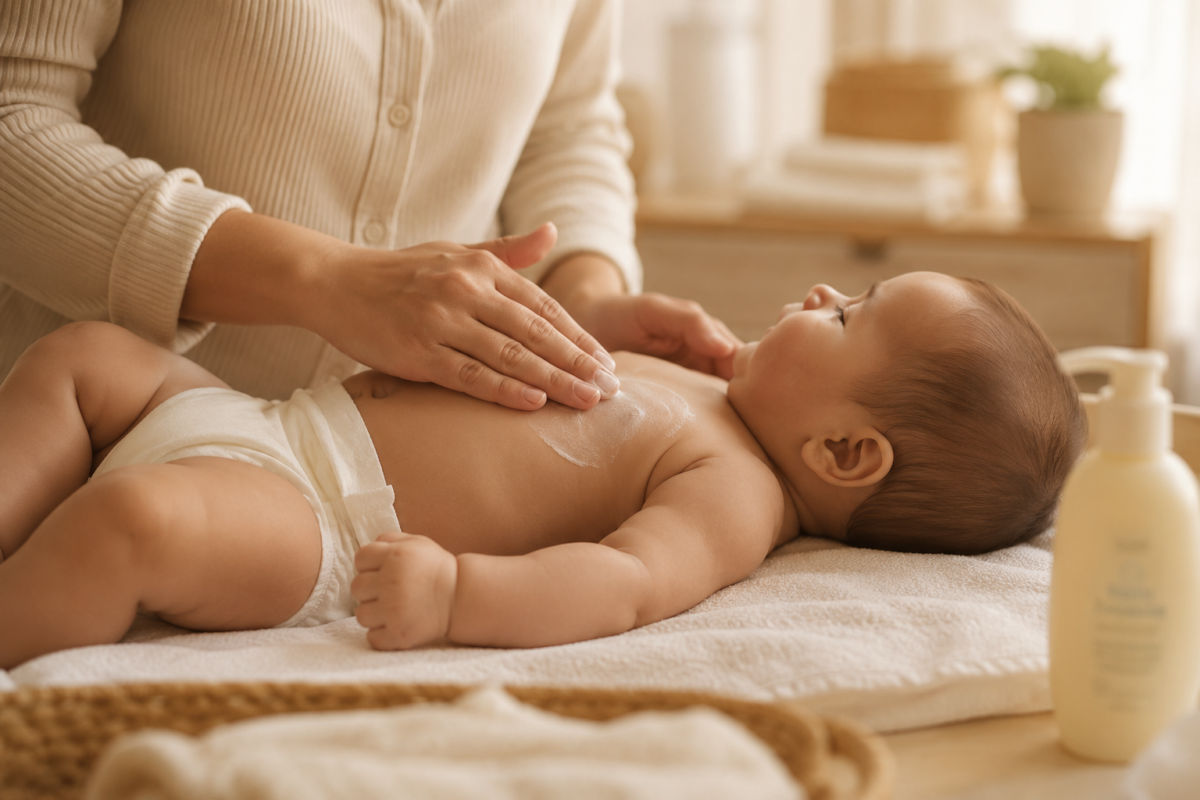
A mother in Mirpur recently shared her story on a parenting Facebook group. She had bought a well-known international baby lotion from a neighbourhood shop at what seemed like a reasonable price. Within two days, her 8-month-old daughter developed angry red patches across her arms and neck. The paediatrician confirmed it was contact dermatitis, likely triggered by an unknown chemical irritant in the product. The lotion was counterfeit.
She is not alone.
Bangladesh's counterfeit crisis does not spare the most vulnerable. According to a Dhaka Tribune report from May 2026, fake and adulterated products have infiltrated nearly every consumer sector, including baby food and baby care. The Bangladesh Pratidin estimated that counterfeit goods occupy roughly 40% of the domestic market. For parents, this is not a statistic. It is a terrifying reality.
Why Baby Skin Is Especially Vulnerable
Infant skin is 20-30% thinner than adult skin, according to research published in the journal Pediatric Dermatology. The skin barrier is still developing in the first 12-24 months of life, meaning it absorbs substances more readily and is far more susceptible to chemical irritation. What might cause a minor reaction in an adult can cause serious inflammation, allergic reactions, or even systemic absorption of toxins in a baby.
Products formulated for babies undergo rigorous dermatological testing specifically because of this vulnerability. Counterfeit products skip all of that testing. They use cheaper, industrial-grade ingredients, often substituting medical-grade emollients with petroleum derivatives or untested fragrance compounds.
What Harmful Ingredients Have Been Found in Fake Baby Products?
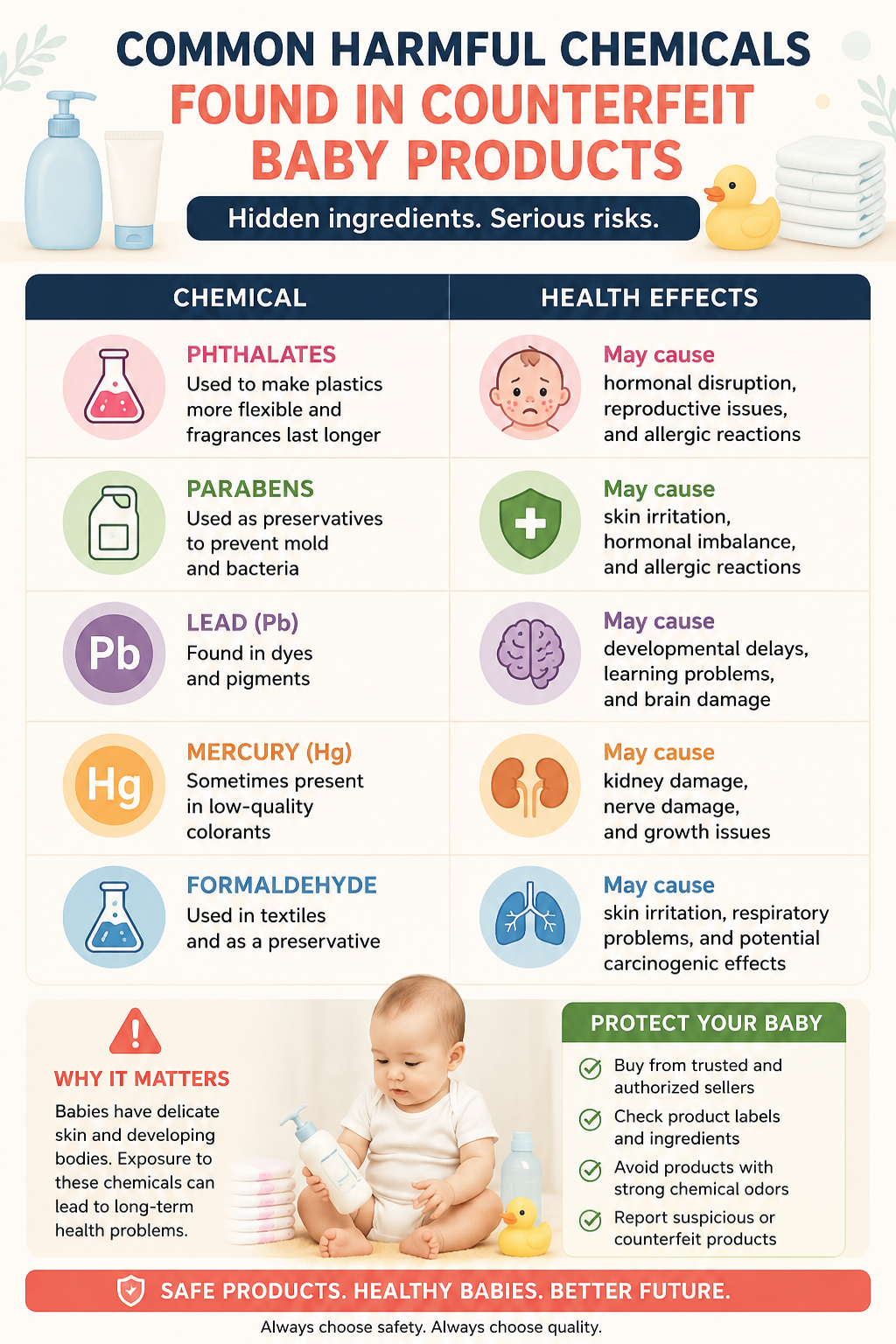
Research conducted by Bangladeshi scientists and reported by New Age Bangladesh found excessive levels of mercury, lead, chromium, and cadmium in cosmetics available in local markets. While these studies focused on general cosmetics, the same supply chains feed baby care counterfeits. A 2023 study published in the International Journal of Environmental Research and Public Health documented heavy metal contamination in counterfeit personal care products across South Asian markets, including baby-targeted items.
These heavy metals are not minor irritants. Mercury exposure in infants can affect neurological development. Lead is a known developmental toxin with no safe threshold, according to the World Health Organization.